
1970年代に作られたG-PLANのネストテーブル
イギリス人女性が1970年代製のG-PLANのネストテーブルを私の工房に持参しました。
持ち主の女性が、一人暮らしを始める大学生の息子さんに貸し出していたものだそうです。毎日このテーブルで食事をされていたとのことで、熱い鍋を直接置いたり、食べこぼしを放置してしまったりした跡が、深いシミとなって点在する厳しい状態でした。 100年以上経った「アンティーク」であれば傷やシミも味わい(パティナ)となりますが、この年代の「ヴィンテージ」家具において、生活汚れによるシミは美しさを損ねてしまいます。
まずは構造のガタつきや、剥離しかけていた箇所を膠(にかわ)でしっかりと再接着。その後、クリーニングとブリーチを何度も繰り返し、限界までシミを抜いてからオリジナルの色味を再現しました。
事前に「これほどのシミは完全には消えない可能性がある」とお伝えしていましたが、「思い入れのある大切なテーブルだから」というオーナー様の熱意に応えたく、時間をかけて丁寧に修復。その甲斐あって、見違えるほど状態が改善しました。 仕上げたテーブルをご覧になったオーナー様には、大変喜んでいただくことができました。
1970s G-PLAN Nest Table
A English Lady brought a 1970s G-Plan nesting table to my workshop.
The owner had lent it to her son, a university student who was about to live on his own. Apparently, He had eaten at the table every day, leaving deep stains scattered throughout the piece from hot pots and spilled food left behind. While scratches and stains add to the patina of an antique piece over 100 years old, stains from everyday life detract from the beauty of vintage furniture of this age.
First, I thoroughly reattached any loose structure and peeling areas with Fish glue. I then repeatedly cleaned and bleached the table, removing as much of the stain as possible, restoring it to its original color.
I had warned the owner in advance that stains of this magnitude might never completely disappear, but I were determined to live up to the owner's enthusiasm for the table, which she held dear. My efforts paid off, with the table now in a state of complete transformation. The owner was very pleased with the finished table.
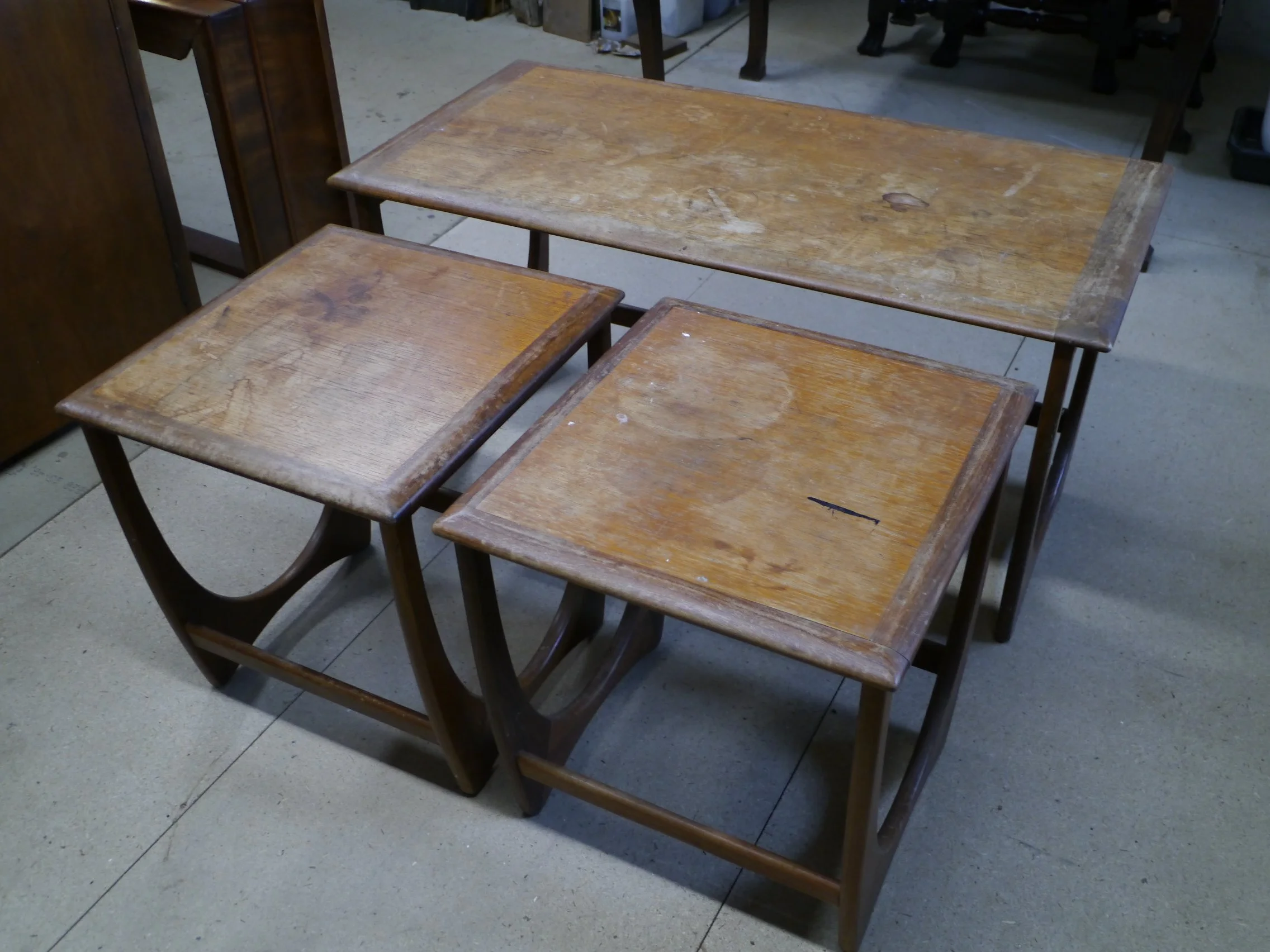
修復前 かなりひどい状態で工房に持ち込まれたG-PLANのネストテーブル
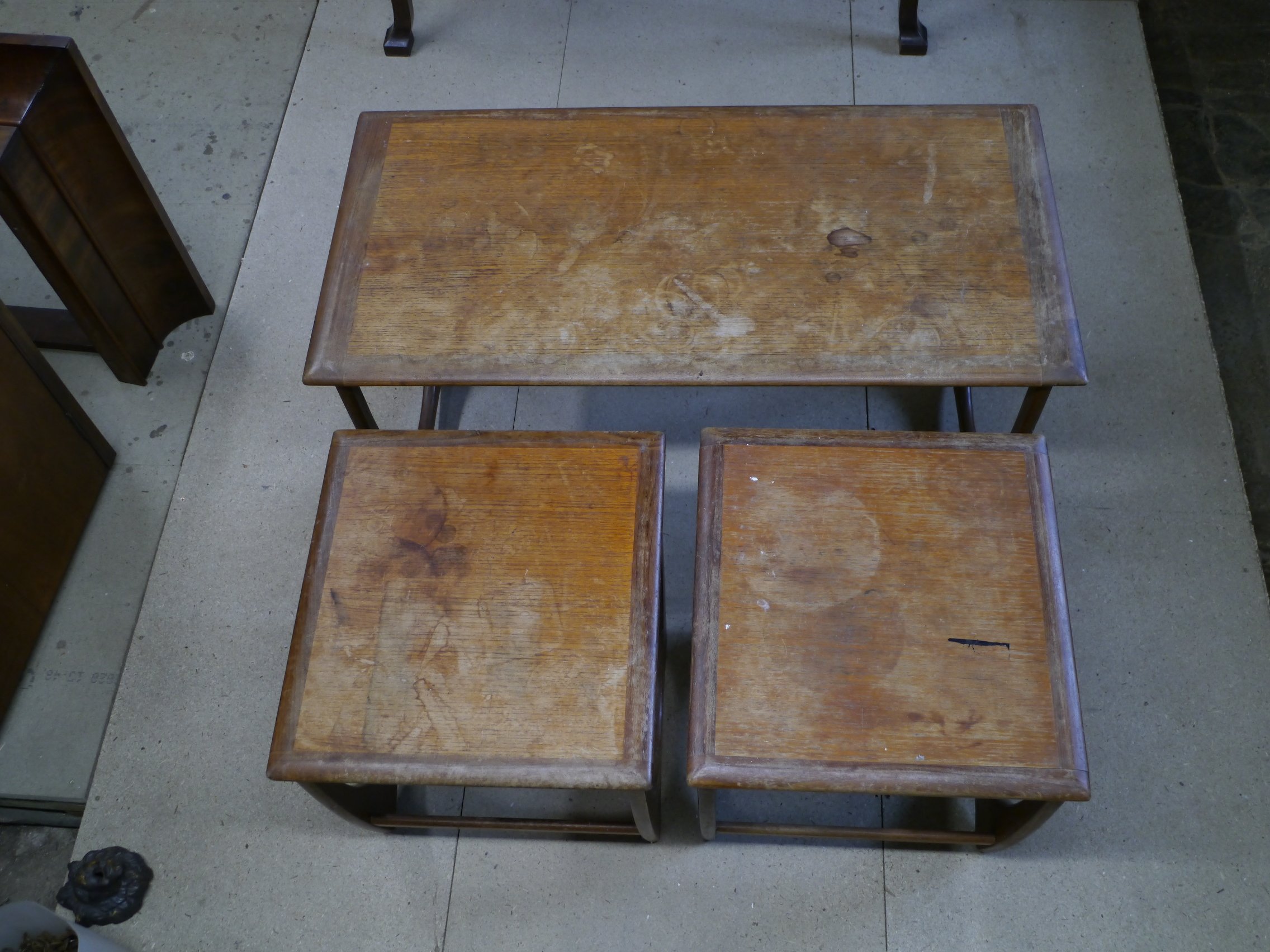
修復前 上から見ると酷さが際立ちます
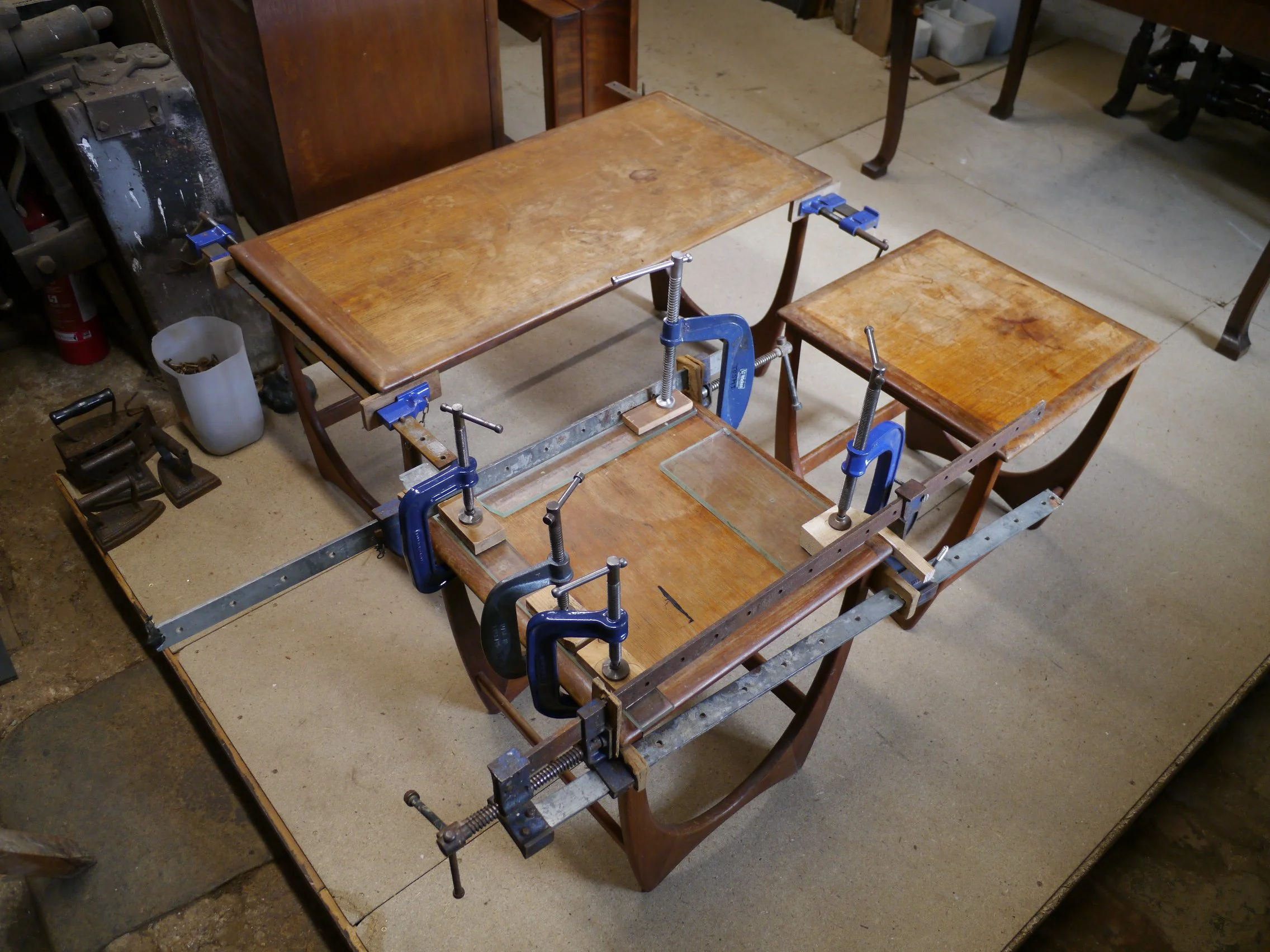
修復途中 まずは緩んだ部分を膠で接着します
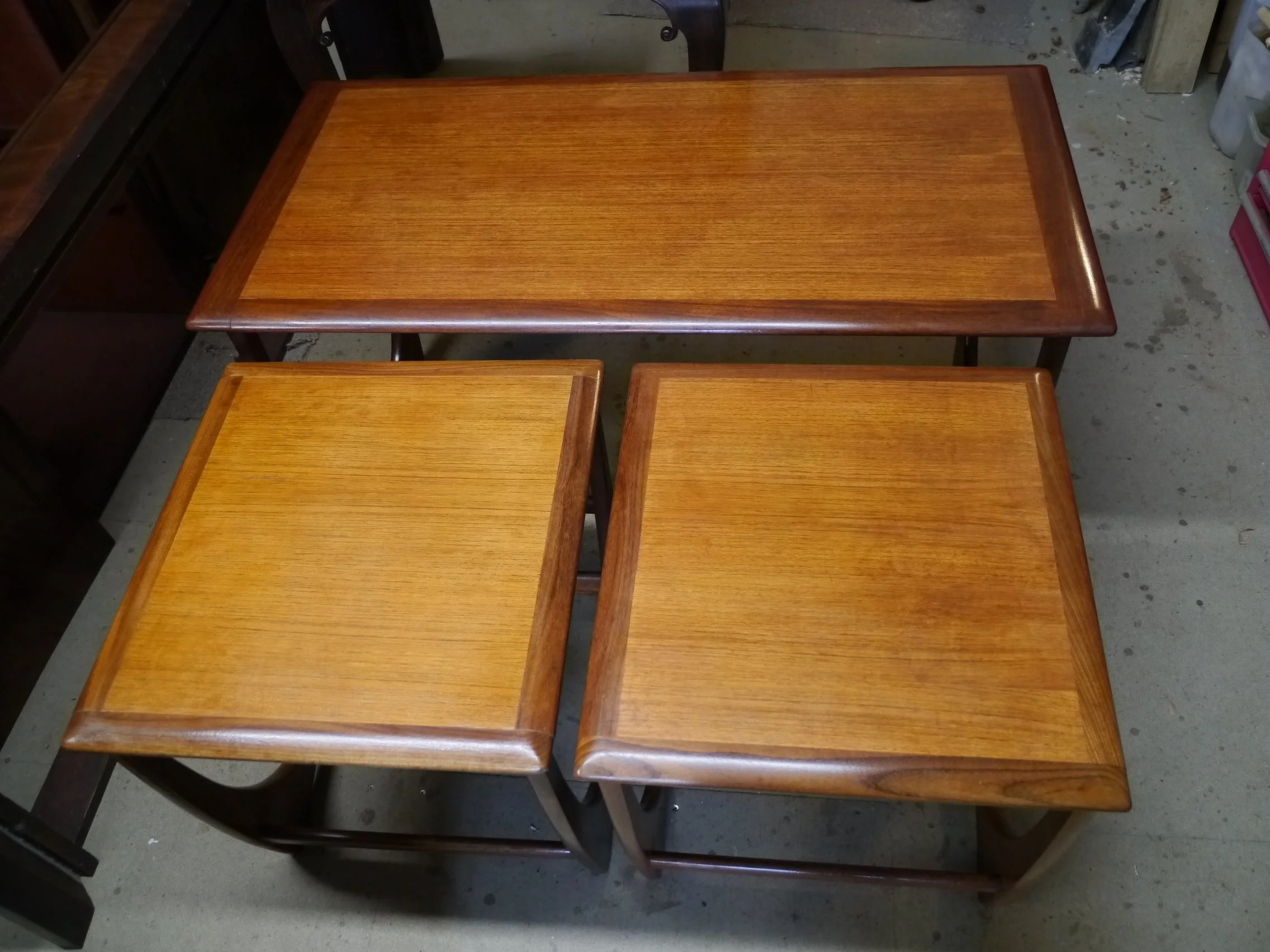
修復後 時間はかかりましたがほぼ全てのシミを取り除きました。
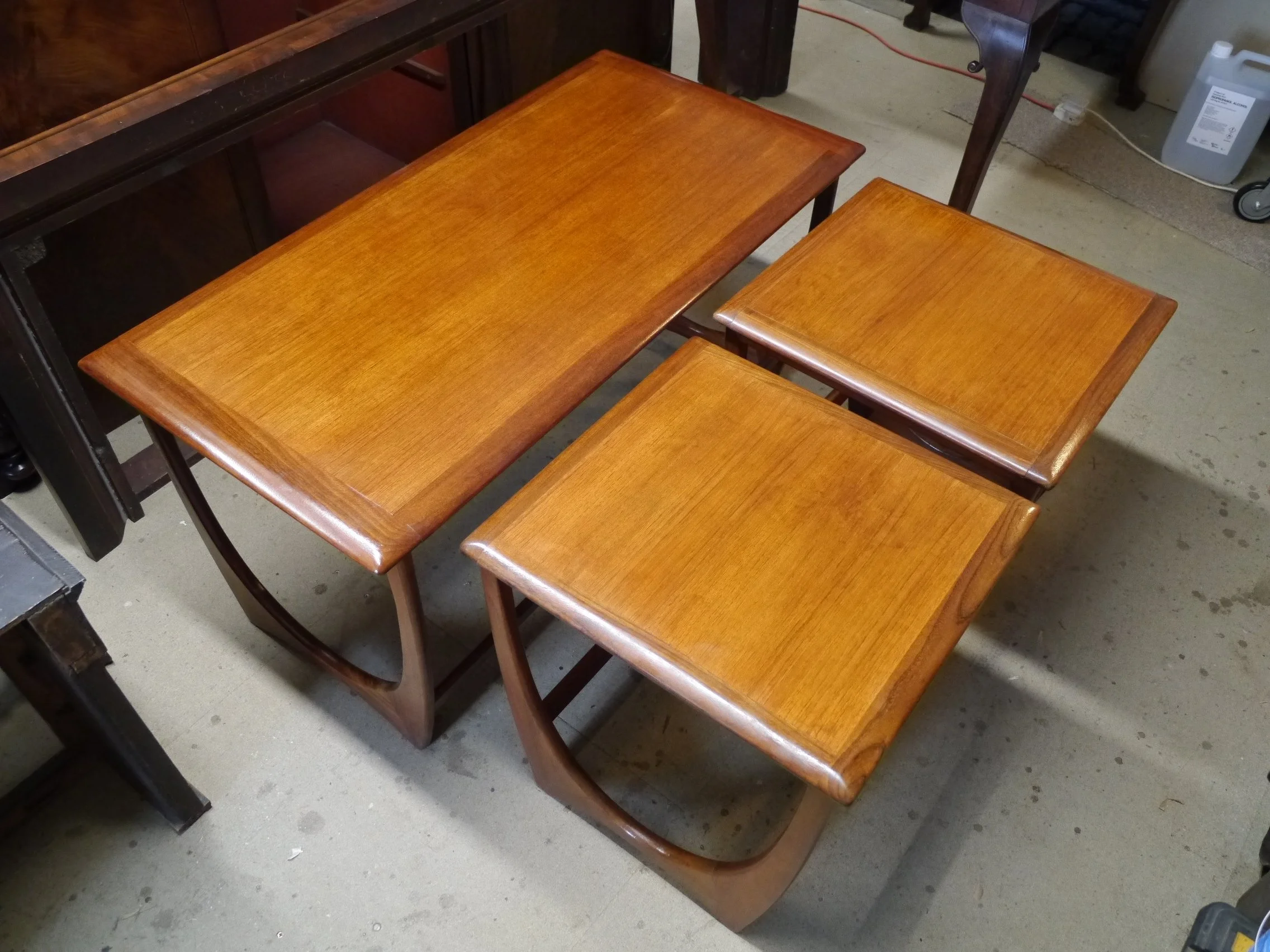
修復後 別角度から